MM logo white 1
MM logo red
Image description is not available

What is a HEPA filter?

Thijs10 MARCH 2026
Close-up of a cordless vacuum cleaner, showing its clear dust container while blue airflows highlight the strong suction performance.

A HEPA filter is a type of filter that you often find in vacuum cleaners and air purifiers. It removes fine dust and dirt particles from the air, so you can breathe cleaner air. In this article, you’ll read how a HEPA filter works, which types of HEPA filters exist, when you need one and how HEPA filters work in specific devices.

In this article: HEPA filters

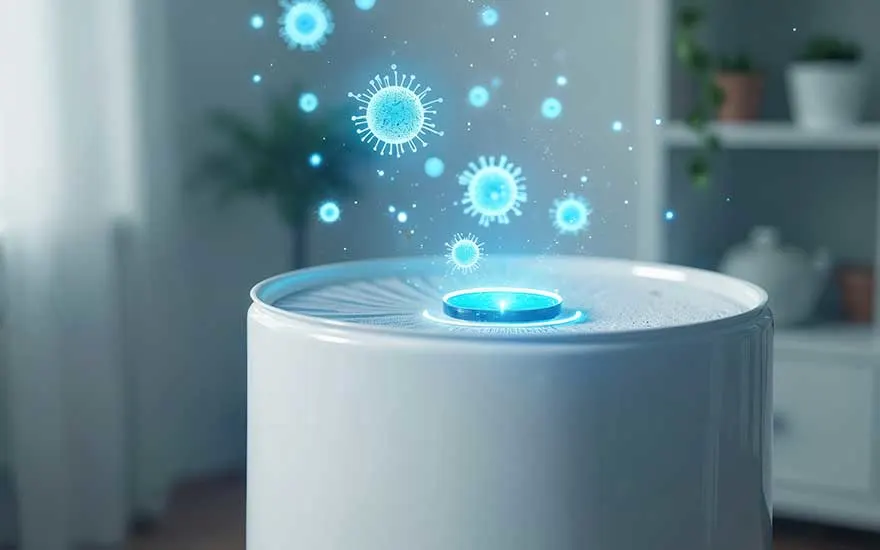
Een luchtreiniger in een woonkamer, waar blauwe zwevende kiemen en deeltjes laten zien hoe het apparaat verontreinigde lucht aantrekt.
  • HEPA stands for High Efficiency Particulate Air.
  • A HEPA filter is made of fibres, usually fibreglass, that remove very small dust particles from the air.
  • Use this type of filter if you suffer from allergies, hay fever, dust mites, asthma or if you have pets.
  • You’ll often find HEPA filters in vacuum cleaners and air purifiers, especially in H13 and H14 variants.
  • Replace the HEPA filter as soon as the airflow decreases, you notice a musty smell, the filter turns grey or black, or the device starts operating noticeably louder.
What does HEPA mean?

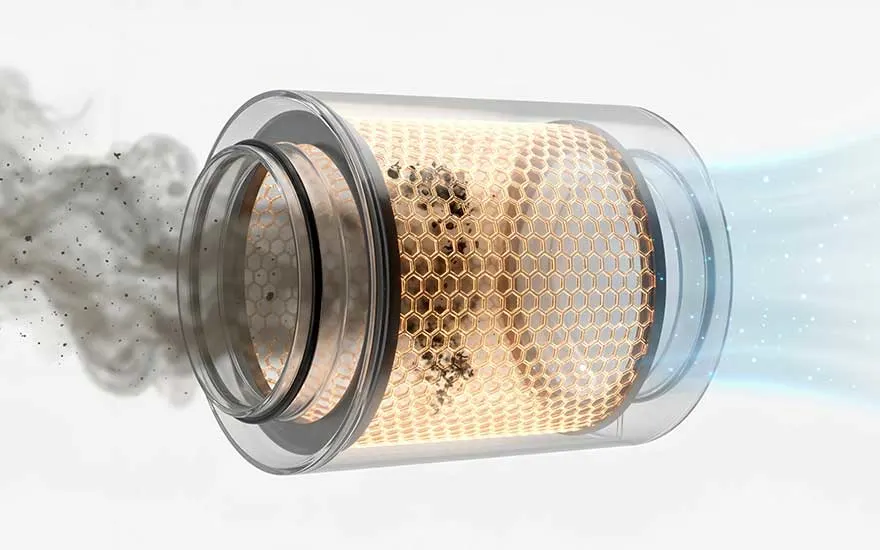
Doorsnede van een cilindrisch filter waarin zwarte rook wordt aangezogen, terwijl schone lucht aan de andere kant helder naar buiten stroomt.

HEPA stands for High Efficiency Particulate Air. It’s a term for filters that can remove very small dust and dirt particles from the air. The term HEPA originated in the early 1940s, during the development of the first atomic weapons. When processing radioactive material, extremely fine, hazardous dust particles were released, to which people in and around the facilities could be exposed. Scientists therefore had to find a way to safely remove these particles from the air. This led to the development of the HEPA filter: a filter specifically designed to capture precisely those ultra-fine radioactive dust particles. Nowadays, we also use HEPA filters in household products and healthcare settings, for example for people with allergies or in operating theatres.

How does a HEPA filter work?

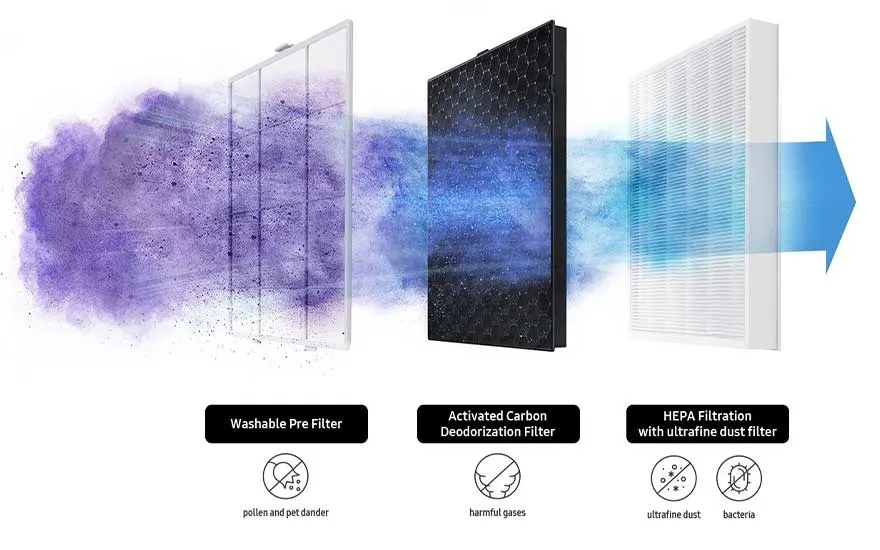
Illustration of three air filters in sequence, as purple and blue particles pass through and emerge as clean air from the last panel.

A HEPA filter is a densely packed filter made of fine fibres, usually fibreglass. A HEPA filter works as follows:

  1. Air flows through the filter.
  2. Larger particles collide with the fibres and become trapped.
  3. Medium-sized particles follow the airflow and then get caught between the fibres.
  4. Very small particles move erratically through the airflow and eventually hit a fibre as well.

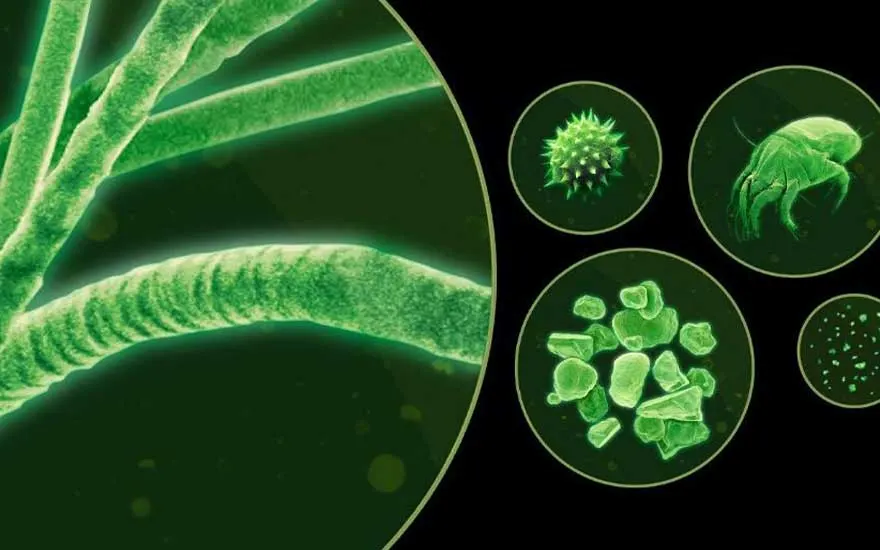
In this way, a HEPA filter captures both large and small particles, such as pollen, dust mite droppings, mould spores and fine dust, while clean air flows back out of the filter.

What types of HEPA filters are there?

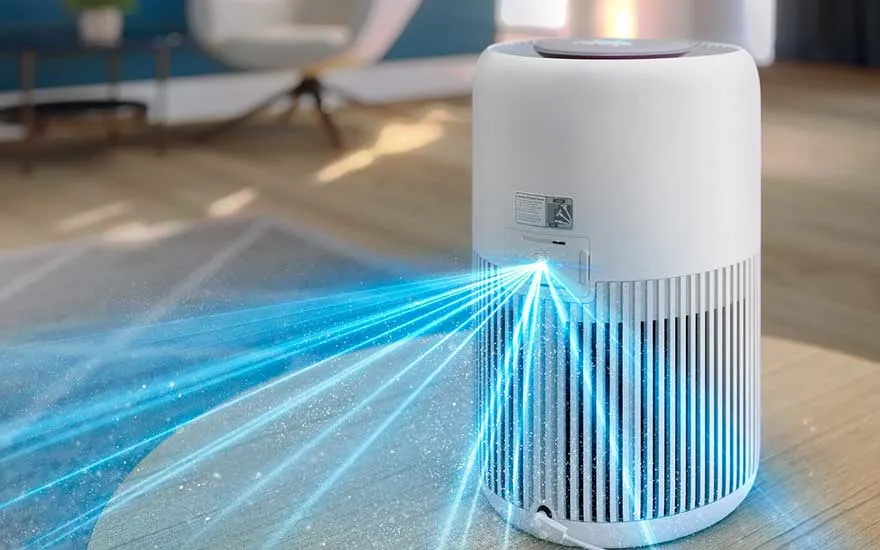
Witte luchtreiniger in een lichte kamer, met felle blauwe lichtstralen die van het toestel naar de vloer schijnen en stofdeeltjes opvangen.

There are different types of HEPA filters, such as H13 or H14. An H13 HEPA filter removes at least 99.95% of particles from the air. An H14 filter goes even further and removes at least 99.995%. The higher the number, the more effectively the filter traps the very smallest particles. In household appliances, such as vacuum cleaners and air purifiers, you’ll usually find HEPA filters up to and including H14.

When do you need a HEPA filter?

Vrouw werkt glimlachend aan een bureau met laptop, terwijl een zwarte luchtreiniger naast haar frisse lucht met groene wervels uitblaast.

A HEPA filter is especially useful if you’re sensitive to dust and allergens in your home. If you suffer from allergies, hay fever, dust mites or have pets, a HEPA filter can help reduce the amount of allergens in the air. A HEPA filter can also contribute to a more comfortable living environment if you have asthma or other respiratory problems. In addition, a HEPA filter is beneficial in places where you want exceptionally clean air, such as baby rooms, workspaces with a lot of fine dust, or homes located along busy roads.

Which devices use a HEPA filter?

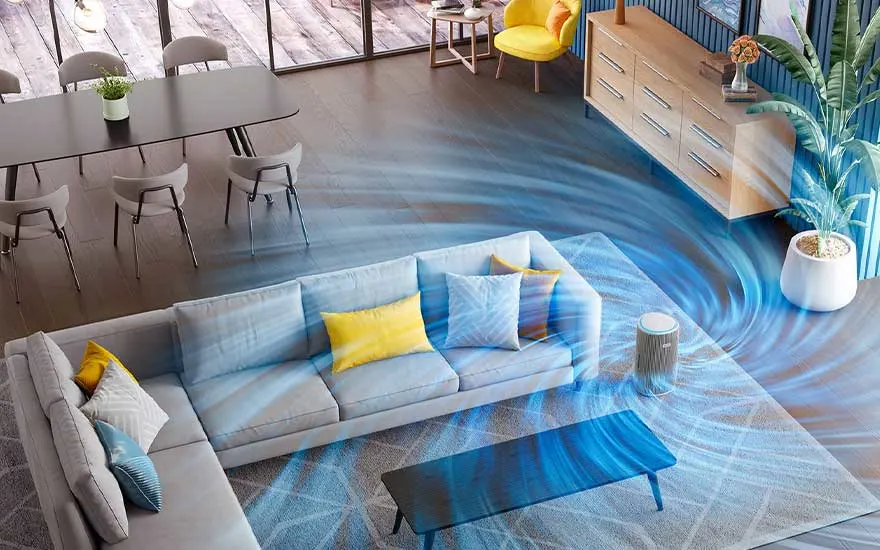
Moderne woonkamer met hoekbank en kleurrijke kussens, waar een compacte luchtreiniger blauwe luchtstromen rond de sofa en tafel laat cirkelen.

There are several household appliances that use a HEPA filter, namely vacuum cleaners and air purifiers. They position the filter at a specific point in the airflow to remove as much pollution from the air as possible before it’s released back into the room.

Choose the right vacuum cleaner filter
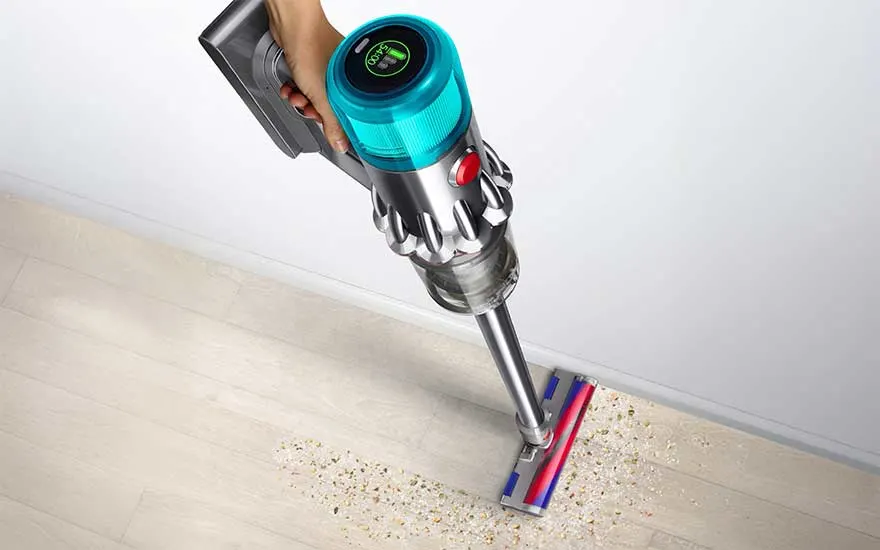
Bovenaanzicht van een steelstofzuiger die kruimels van een lichte houten vloer opzuigt, met gekleurde borstelkop en transparante opvangbeker.

Vacuum cleaners

In vacuum cleaners, the HEPA filter is usually located at the back of the appliance near the exhaust vent, together with any other vacuum filters. This is how a HEPA filter works in a vacuum cleaner:

  1. Air is first drawn in through the floorhead, then passes through the hose and into the dust bag or dust container.
  2. The largest dirt particles and crumbs are collected there. The finer dust particles and allergens that remain in the air then pass through the HEPA filter at the exhaust and become trapped.
  3. This prevents the vacuum cleaner from blowing fine dust, pollen or dust mites back into the room.

View all vacuum cleaners with HEPA filters
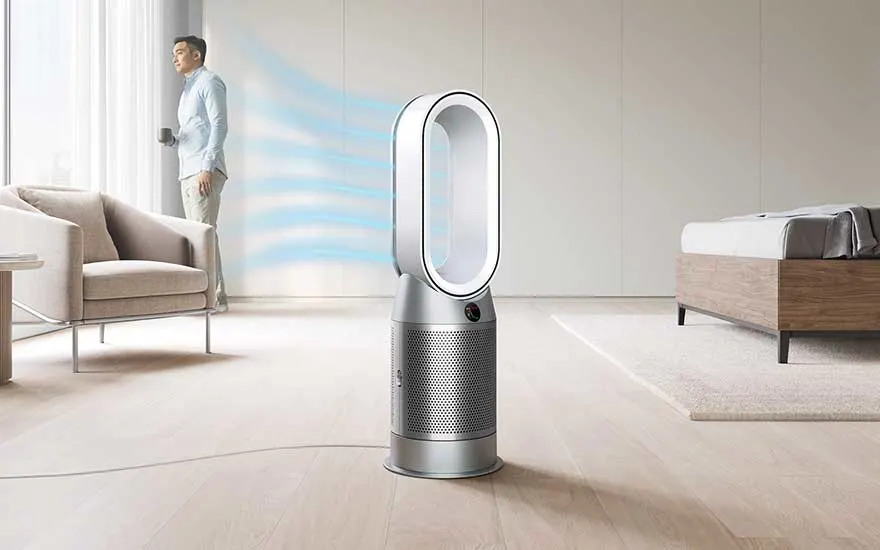
Moderne torenluchtreiniger in een minimalistische slaapkamer, blaast zachte blauwe luchtstromen uit terwijl een man bij het raam staat.

Air purifiers

In air purifiers, the HEPA filter often forms the core of the filtration system. This is how a HEPA filter works in an air purifier:

  1. A fan inside the device continuously draws air from the room into the unit.
  2. This air usually first passes through a pre-filter that captures larger dust clumps and hairs. Sometimes an activated carbon filter follows, which removes odours from the air.
  3. The air then flows through the HEPA filter, where small particles such as pollen, mould spores, smoke particles and fine dust are trapped.
  4. The purified air is then blown back into the room.

Which air purifier should you choose?

How often should you replace a HEPA filter?

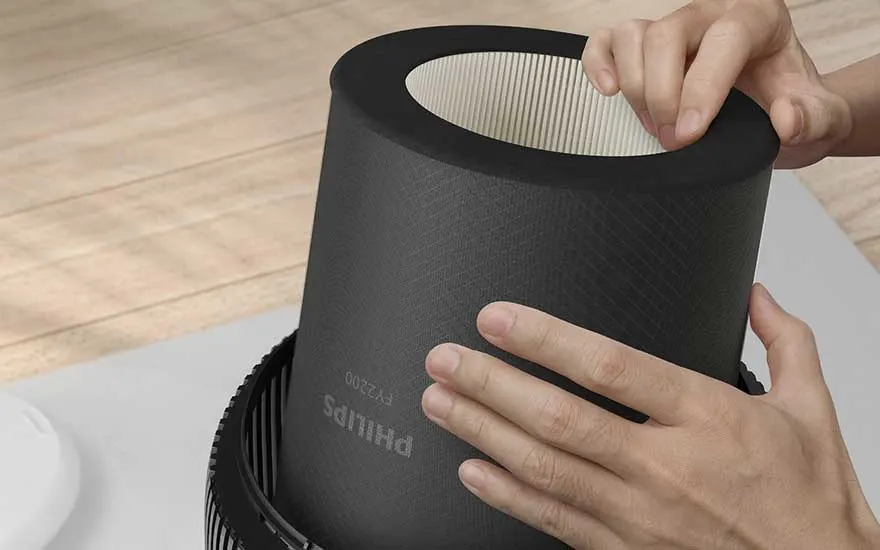
Close-up van handen die een cilindrische Philips-filter in een luchtreiniger plaatsen, boven een houten vloer in een lichte kamer.

Over time, a HEPA filter fills up with dust and particles. As a result, less air can pass through it and its filtering performance decreases. It’s a good idea to replace the filter when you notice that the air quality is getting worse or the device is performing less effectively.

Pay attention to the following signs:

  • Clearly reduced suction power in a vacuum cleaner while the bag or dust container isn’t full.
  • With an air purifier, look out for a higher noise level because the fan has to work harder, a weaker airflow from the device, or consistently worse air-quality readings (visible in the app or on the device).
  • If you notice more dust or a musty smell in the room, or if allergy symptoms return more quickly, this can also be a sign that the HEPA filter needs replacing.
  • Always check the manufacturer’s instructions as well, as they usually indicate how long the filter can be used.

Our advice on what a HEPA filter is

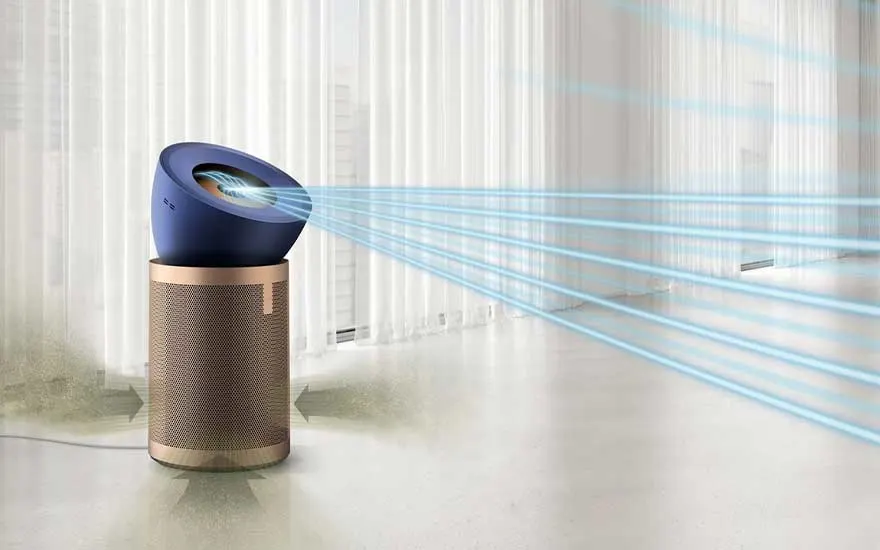
Designluchtreiniger met gekantelde blauwe ring, waaruit sterke blauwe luchtstralen schuin de kamer in worden geblazen richting ramen.

HEPA filters are often found in vacuum cleaners and air purifiers. They trap the tiniest dust particles, so you breathe cleaner, healthier air. This is especially useful if you suffer from allergies, live near busy roads or have pets. In household appliances, you’ll mainly come across H13 and H14 filters. Replace a HEPA filter regularly to ensure it continues to work properly and its performance doesn’t decline.

Frequently asked questions

Bekijk soortgelijke artikelen